
Iran's Foreign Minister Vows Policy Stability as Brent Crude Holds Near $115
Tehran asserts its diplomatic stance remains unchanged despite U.S. threats of renewed strikes, even as a tanker is disabled in the Strait of Hormuz and regional mediators convene.
By Teresa Delgado ·
Global energy markets remain tense as the United States and Iran exchange conflicting signals regarding the potential resumption of military conflict. On Sunday, Iranian officials confirmed that indirect communications with Washington are ongoing, asserting that Tehran’s strategic positions will not change regardless of whether President Donald Trump orders new attacks.
Brent crude oil traded near $115 per barrel early Monday, maintaining high levels following a sharp rise late last week. This price action reflects supply concerns stemming from ongoing wars in the Middle East and Ukraine, compounded by rising gas demand as the Northern Hemisphere enters winter. The elevated costs have drawn scrutiny from both market analysts and political leaders.
President Trump outlined his decision-making process during a Sunday interview on Fox News. He stated, "I have a decision to make: Do I finish it off, which would be very easy to do, or do I make a deal?" This comment followed his Friday suggestion that the U.S. might conduct another "Epic Fury" campaign, a reference to the joint U.S.-Israeli operations against Iran that started on Feb. 28. Trump also claimed American control over the Strait of Hormuz while criticizing the 2015 nuclear deal.
Speculation is mounting that new strikes could occur after next Tuesday’s midterm elections. The U.S. has deployed additional forces to the region, including a third aircraft carrier group, although American diplomatic staffing has been reduced. These military movements contrast with the ongoing diplomatic efforts led by regional powers.
Abbas Araghchi, the Iranian Foreign Minister, addressed a televised event in Tehran to clarify the government's position. He stated, "Whether there is war or not, our policies remain the same," adding that Washington and Israel had attempted this approach twice previously without a different outcome. Esmaeil Baqaei, the foreign ministry spokesperson, noted that the window for diplomacy is open and that messages continue to be relayed to the U.S. through intermediaries, even though direct talks have stalled for weeks.
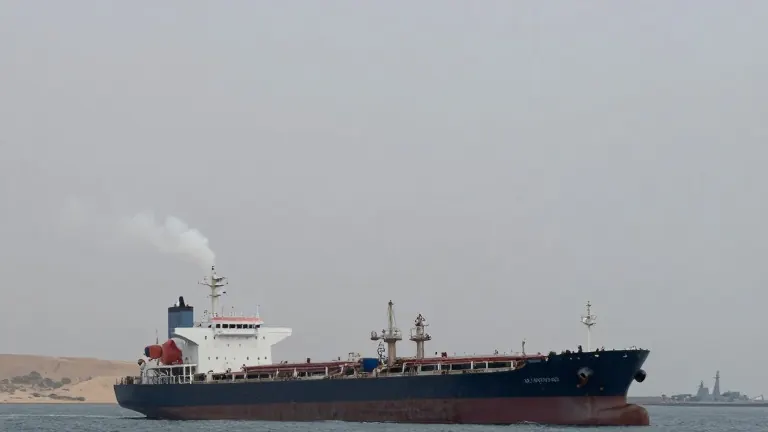
Physical threats to shipping have intensified in the Persian Gulf. The U.K. Maritime Trade Operations center reported that a tanker exiting the Strait of Hormuz was hit by an unknown projectile on Friday, disabling the vessel. The crew was reported safe. Iran claimed responsibility for strikes on at least four tankers near the strait on Thursday, though these claims lacked corroboration. Trump accused Tehran of staging such attacks to inflate prices before the midterms.
Regional leaders are working to de-escalate the situation. Saudi Defense Minister Khalid bin Salman, Pakistani Army Chief General Asim Munir, and Turkish Intelligence Chief Ibrahim Kalin arrived in Tehran on Monday. They held security talks with Iranian officials, including security chief Mohsen Rezaei. Rayed Krimly, the Saudi Deputy Minister for Public Diplomacy, said the visit supports mediation efforts by Qatar and Pakistan following eight months of regional conflict.
Violence continued in Yemen, where the Saudi-led coalition intercepted a ballistic missile fired by the Houthis toward Riyadh. The coalition also destroyed two launchers in Sanaa. The Iran-backed Houthis claimed their missile hit Riyadh’s international airport hours after flights resumed and that drones struck oil pumping stations. Previous attacks this month had closed the airport for over two weeks and forced Saudi Arabia to postpone its major investment conference until 2027.
In Israel, Prime Minister Benjamin Netanyahu warned that Iran and its proxies might attack to disrupt Tuesday’s elections. He told the public, "Don't test us." Defense Minister Israel Katz dismissed a Channel 12 report suggesting a clash between Netanyahu and Army Chief Eyal Zamir, calling the report "entirely baseless." Netanyahu labeled the report "rubbish," while Iran's foreign ministry stated that the election result "makes no difference" to Tehran.
Source: CBS News